






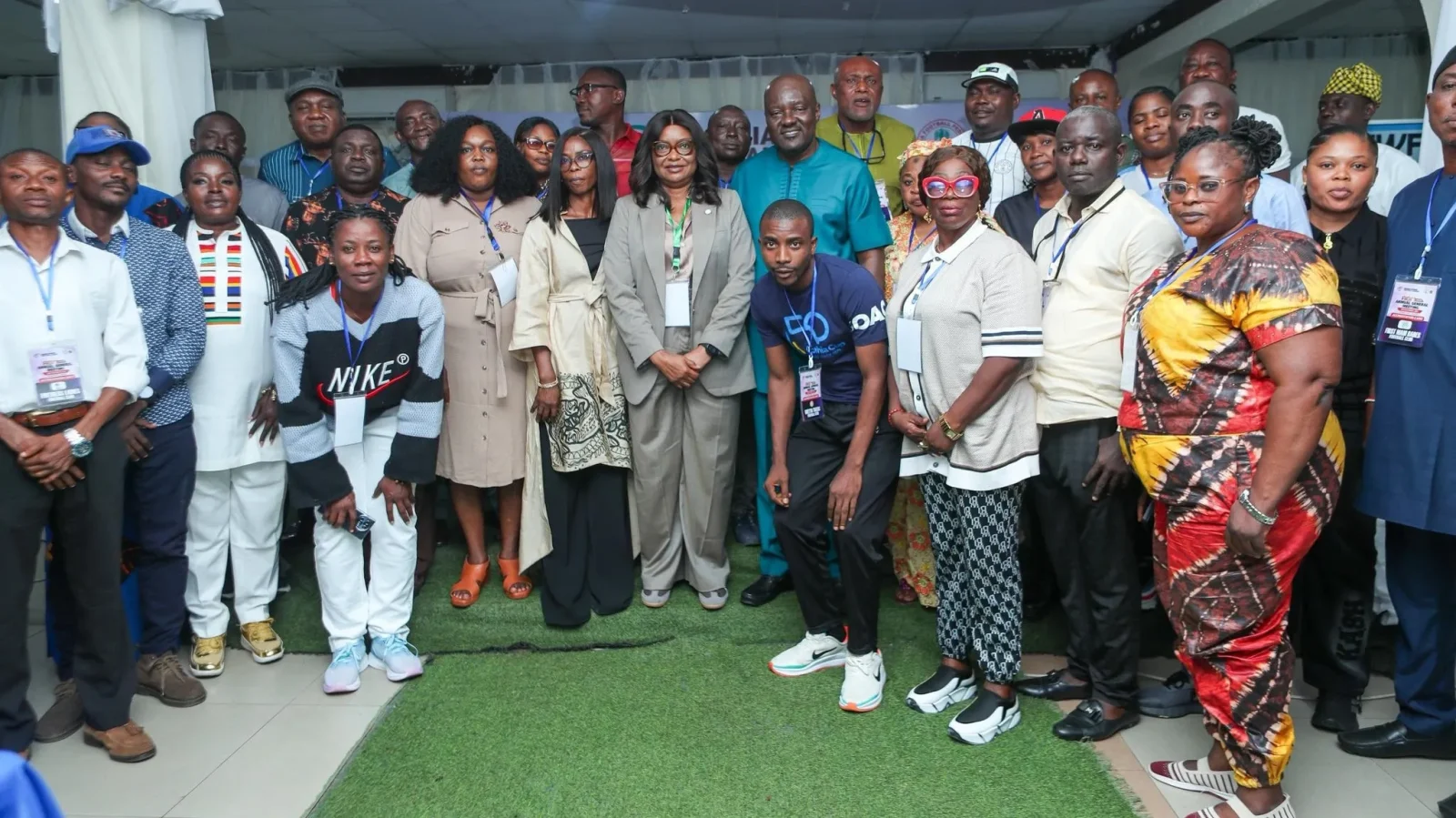
There’s a quiet revolution brewing in Nigeria Women’s Football League (NWFL) — one not defined by goals or trophies, but by the promise of something far more lasting: structure, dignity, and sustainability.
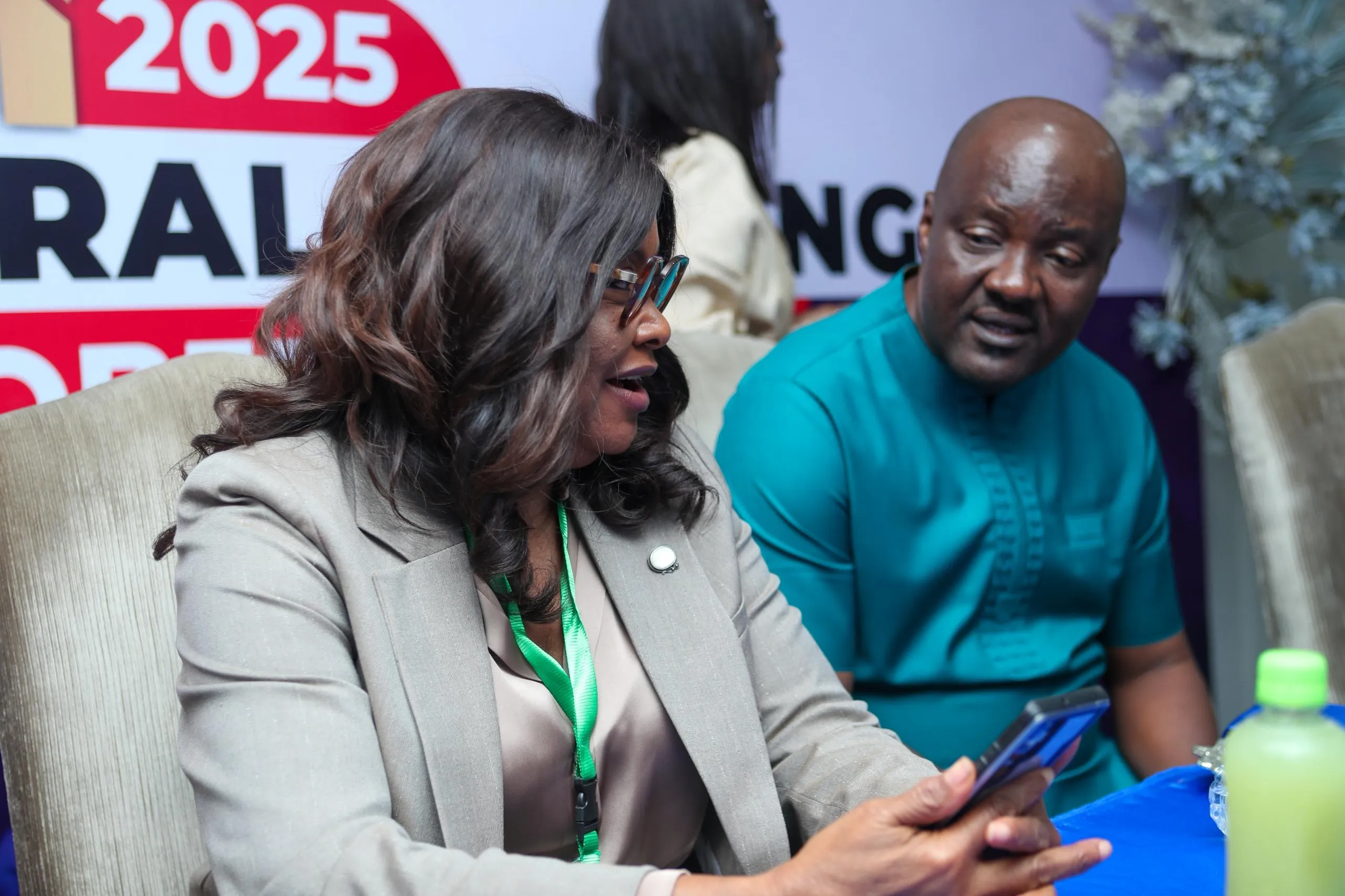
At the 2025 NWFL Annual General Assembly in Port Harcourt, the winds of reform gathered strength.
From the podium, the message from Nigeria Football Federation (NFF) President Alhaji Ibrahim Musa Gusau — delivered by former NWFL Chairperson Aisha Falode — rang clear: “We can no longer build our women’s game on survival. It must stand on sustainability.”
That statement might just become the cornerstone of a new era.
NWFL: From survival to stability
For too long, Nigeria’s women’s league has lived on the margins — underfunded, underprotected, yet overperforming. Now, at last, the NFF seems ready to confront the uncomfortable truths that have long held it back.
The reforms unveiled were sweeping: a national minimum wage for players, compulsory insurance for all registered athletes, and a bold mandate requiring every club to establish feeder teams at U-15 and U-17 levels.
It’s the kind of structural reform that moves a league from passion-driven to professionally governed.
The minimum wage proposal, to be overseen by the NFF Compliance Unit, is more than just an economic policy — it’s an act of respect. It tells every woman pulling on an NWFL jersey that her work matters, that her talent deserves fair compensation, and that her career is not expendable.
Equally vital is the introduction of mandatory player insurance — a long overdue safeguard in a league where too many have been left vulnerable by injuries and empty promises.

As Gusau rightly said, “A truly professional league must guarantee every player a secure working environment and fair compensation.”
It’s a moral step, yes. But it’s also a professional obligation.
Building for tomorrow: The feeder team revolution
Then came what might prove to be the most transformative policy of them all. Every NWFL club will now be required to maintain youth feeder teams — U-15s and U-17s — ensuring a steady flow of young talent into the senior ranks.
“The future of women’s football depends on structured development,” Gusau declared. “Every club must invest in youth, not as a luxury, but as a necessity for continuity.”
For a nation with such a rich reservoir of raw footballing talent, this could be the spark that turns potential into a production line.
With the NFF Technical Department promising standardised coaching, scouting, and digital player tracking systems, Nigeria might finally start catching its future stars before they slip through the cracks.
Governance, coaching, and the business of the game
Professionalism isn’t just about pay slips — it’s about governance, infrastructure, and accountability. The NFF says all NWFL head coaches must now hold at least a CAF B Licence — a necessary push to raise the technical ceiling of the game.
The focus will also turn to league structure, consistent calendars, and, crucially, commercial growth. Gusau’s challenge was crystal clear: “We must move from staging matches to hosting football events.”

That’s more than semantics. It’s an invitation to think of the NWFL not just as a competition, but as an economic product — a platform capable of drawing investment, entertainment value, and pride.
The 2025/26 season: A new chapter begins
All these ideals will soon face their first real test. The 2025/26 NWFL Premiership season kicks off on November 26, 2025, with 20 clubs vying for glory across two groups.
Bayelsa Queens, the reigning champions, are seeded in Group A, while Nasarawa Amazons anchor Group B. The opening fixtures are already tantalising: Bayelsa Queens vs Edo Queens, Nasarawa Amazons vs Delta Queens, and Heartland Queens vs Ekiti Queens headline a thrilling opening weekend.
Beyond the matches themselves, the season will carry a heavier weight — that of expectation. Will the reforms translate into real change on the pitch and beyond it? Will players begin to feel the security and respect they’ve long deserved?
NWFL: A league on the cusp
It’s easy to dismiss policy announcements as mere promises — Nigeria’s football history is littered with unfulfilled blueprints. But this feels different. There’s a tone of intent, a sense of direction, and, most importantly, a recognition that the women’s game deserves its own ecosystem, not just borrowed scraps from the men’s structure.
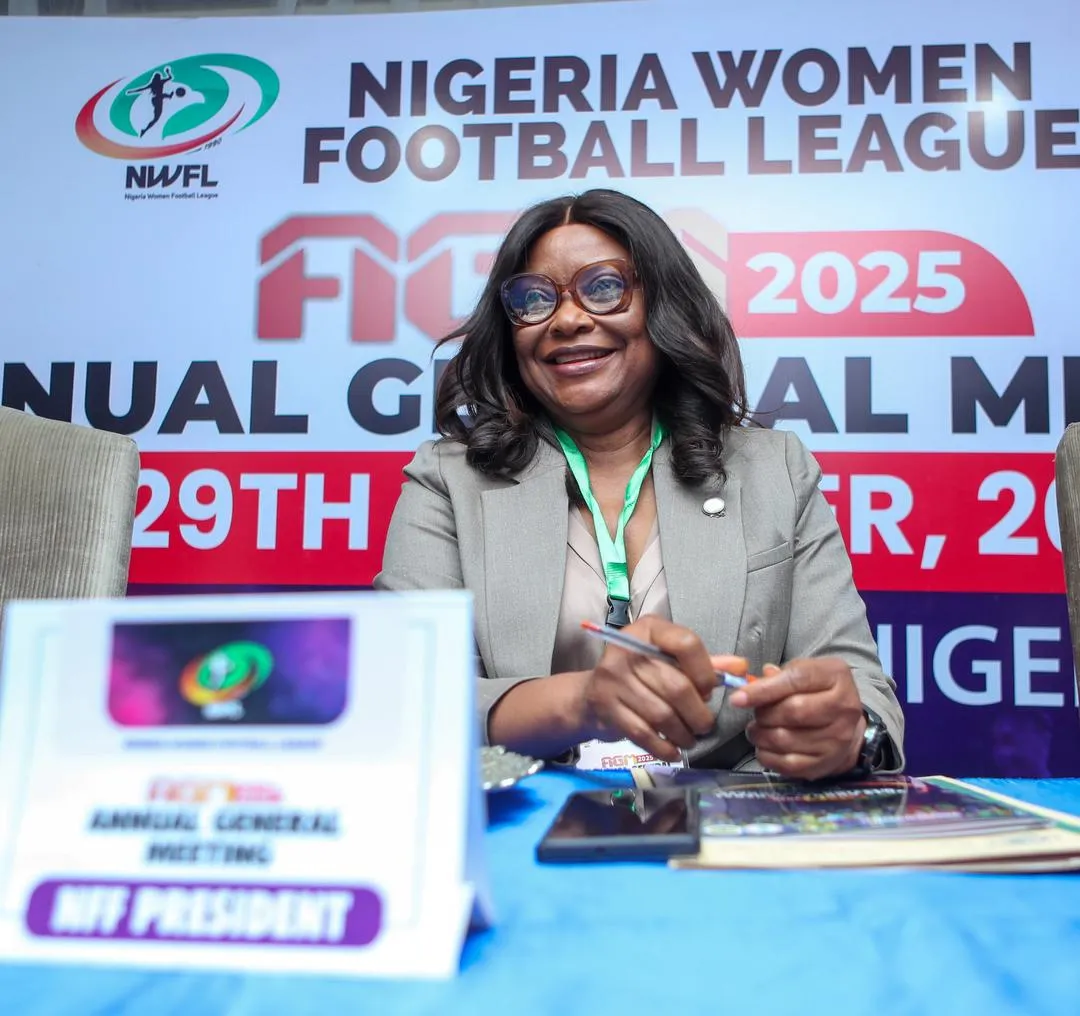
As the countdown to kickoff begins, one can’t help but feel a cautious optimism. The NWFL has long been home to passion, talent, and resilience. Now, finally, it might be getting the foundation it deserves.
If the reforms hold and the execution matches the ambition, this could be the season that defines the future of Nigerian women’s football — not just for 2025, but for a generation.
The ball will roll on November 26. But make no mistake — the real game has already begun.







Leave a comment